
New Career. New Contracts. New Tax Responsibilities.
Wait... Where Do I Start?
You’ve spent years perfecting your craft, not studying tax returns. That’s where we come in.
Specialist accountancy support for performers and creatives taking their first steps into self-employment.

You Have Nailed The Audition. Now What About The Admin?
You’ve trained, rehearsed, auditioned and worked hard to turn your passion into a career. Then suddenly, alongside contracts, rehearsals and performances, you’re expected to understand tax, National Insurance, invoices and Self Assessment. Nobody really covered that bit at drama school, did they?
Whether you’ve just landed your first professional role, started taking on freelance gigs or begun teaching alongside performing, getting your finances organised early can save you a lot of confusion later.
At Performance Accountancy, we specialise in helping performers and creatives navigate the financial side of their careers. We’ll help you understand what you need to do, when you need to do it, and how to avoid those unpleasant tax surprises.
Because your next big performance shouldn’t be a last-minute scramble to find your receipts.
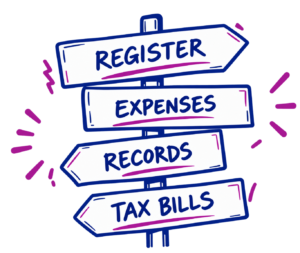
The Financial Basics: What Do You Actually Need to Know?
Starting your performing career comes with plenty of firsts. Your first contract, your first professional invoice, your first proper payday…
And, eventually, your first encounter with HMRC.
The good news? You don’t need to become an accounting expert overnight. But there are a few important things worth getting right from the beginning.
Do I Need to Register as Self-Employed?
Not every performer is automatically self-employed. You might be freelance, employed or a mixture of both! We’ll help you understand your tax status, whether you need to register with HMRC and what your responsibilities are.
What Expenses Will I be Able to Claim?
From dance shoes to sheet music and agent’s commission, performers have some unusual expenses! But not everything is tax-deductible. We’ll help you understand what you can legitimately claim and avoid costly mistakes.
Do I Need to Keep All Those Receipts?
The short answer to that is yes! But that doesn’t necessarily mean keeping a shoebox overflowing with every receipt you have to hand. We’ll help you get organised, keep accurate records and make tax return time far less stressful.
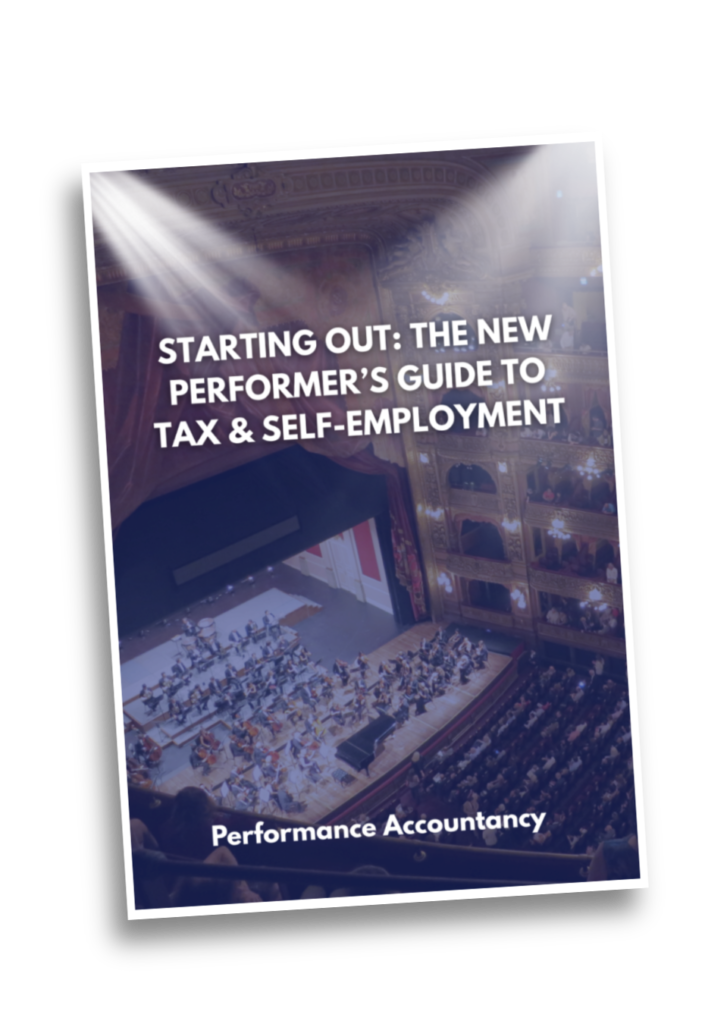
Introducing The Performer's Tax Toolkit
Nobody hands you a tax manual when you land your first professional contract. But suddenly, you’re expected to understand income, expenses, National Insurance and Self Assessment. That’s where our Performer’s Tax Toolkit comes in. Created specifically for performers, this practical guide takes you through the essentials of managing your tax affairs, without the complicated jargon.
Inside, you’ll discover:
- What counts as income when you're working as a performer.
- Which expenses you may be able to claim (and which ones to avoid).
- How travel and subsistence expenses actually work.
- The basics of National Insurance.
- Why payments on account can catch people by surprise.
- Important tax deadlines and record-keeping responsibilities.
- How to feel more prepared when January rolls around.
Less confusion. Fewer surprises. More confidence.
Are You a Sole Trader, Limited Company… or Something Else?
One of the questions we often hear from people starting out is:
“Should I be a sole trader or set up a limited company?”
And the answer isn’t always as straightforward as you might think.
For many performers starting their freelance careers, operating as a sole trader may be the simplest option. But depending on your circumstances, other business structures might be worth considering.
The right approach depends on several factors, including the nature of your work, your earnings, the contracts you’re offered and your longer-term plans.
Not sure where you fit? That’s exactly the sort of question we can help you work through.
Sole Trader
Operating as a sole trader generally involves less administration than running a limited company. You are personally responsible for the business and its obligations, and you normally report your business profits through Self Assessment.
Limited Company
A limited company is a separate legal entity with additional reporting, accounting and administrative responsibilities. It can be appropriate in certain circumstances, but it isn’t automatically the most tax-efficient or practical option for every performer.
What About PAYE Employment?
Some performing arts contracts are treated as employment, with tax deducted through PAYE. Others may involve genuine self-employment. And you can have both types of income in the same tax year.
It’s important to understand how your engagements are classified rather than assuming every performing contract is freelance.
How Can Performance Accountancy
Help You Get Started?
You don’t need to have everything figured out before speaking to an accountant. In fact, getting advice early can help you avoid problems that become much harder to untangle later.
We understand that a performer’s working life rarely follows a predictable nine-to-five routine. You might have several income sources, irregular payments, periods between contracts or a mixture of performing and teaching work.
Our support is tailored to your circumstances and the stage you’re at in your career.
Self Assessment & Tax Returns
We’ll help you meet your tax obligations, submit your returns and understand what you owe.
Getting Set Up Properly
Understand your tax status, register with HMRC and choose the right structure for your career.
Support Your Development
We’re here as your career grows, your income changes and new opportunities take centre stage.
Planning For Tax Bills
Understand your tax liabilities, plan ahead and avoid any nasty surprises when payments are due.

Why Choose an Accountant Who Understands the Performing Arts?
Because your working life isn’t quite like everyone else’s.
One month you’re performing eight shows a week. The next, you’re auditioning, teaching or juggling multiple projects.
With a mixture of PAYE, freelance contracts and different income streams, your finances can quickly become complicated.
At Performance Accountancy, we understand the unique challenges of working in the performing arts. We speak your language, know your industry and make tax and accounting feel a little less daunting.
You bring the talent. We’ll bring the tax knowledge.
Some Of Our FAQ's:
Do I need an accountant when I'm just starting out?
Not necessarily. Some performers manage their own tax affairs, particularly when their circumstances are straightforward. However, professional advice can be useful if you’re unsure about registering with HMRC, have different types of income, need help understanding expenses or simply want reassurance that you’re doing things correctly.
Getting things right from the beginning can save time and complications later.
When do I need to register as self-employed?
If you’re required to register for Self Assessment, the usual registration deadline is 5 October following the end of the tax year in which you first became liable to notify HMRC.
Whether you need to register depends on your circumstances and income. For example, the £1,000 gross trading income allowance is relevant to many people starting self-employment, although there are exceptions and additional considerations. It’s worth checking your position early rather than waiting until your first tax return is due.
Can I be employed and self-employed at the same time?
Yes! This is particularly common in the performing arts.
You might have PAYE income from one engagement and self-employed income from teaching, performances or other freelance work. Both types of income may need to be considered when working out your overall tax position.
Can I claim for auditions, classes and training?
Potentially, but the rules can be complicated. Whether an expense is allowable depends on its purpose, the nature of your work and whether you’re employed or self-employed.
For example, training that updates existing professional skills can be treated differently from training that establishes a new trade or profession. It’s important to assess the circumstances rather than assuming every career-related expense is deductible.
What happens if I don't earn much in my first year?
You may have little or no Income Tax to pay, depending on your total income and circumstances. However, that doesn’t necessarily mean you have no reporting responsibilities.
You may still need to submit a tax return, and your overall position can be affected by other income sources.
What is Making Tax Digital, and will it affect me?
Making Tax Digital for Income Tax is changing how some self-employed people and landlords keep digital records and report information to HMRC.
The rules are being introduced in stages, based on qualifying income and other eligibility conditions.
Not every new performer will be affected immediately, but it’s worth understanding how the changes could apply as your earnings grow.
Your Career Is Just Beginning. Let's Get the Finances Right.
You’ve got auditions to prepare for, rehearsals to attend, performances to give and a career to build. Understanding tax and accounting might not be the most exciting part of that journey, but getting it right can make everything else a little easier.
Whether you need help understanding your first tax return, getting registered with HMRC or simply figuring out where to begin, we are here to help.
Let’s take some of the financial uncertainty out of your next big adventure.